Optimistic Misinterpretation
What Is Optimistic Misinterpretation?
This project lives in the space between what something is and how it feels. It doesn’t deny pain, anxiety, imperfection, or mortality – it just refuses to interpret them in the expected way. Instead of resisting the weight, it moves with it. Instead of fixing everything, it dances through it.
Every track is a reframing. A bad day becomes motion. Anxiety becomes rhythm. Imperfection becomes identity. Even endings become energy that doesn’t disappear, just changes form. This is not about pretending things are okay – it’s about choosing to keep going anyway, and finding something alive inside that choice.
The system doesn’t break.
It adapts.
And sometimes… it sounds like music.
The Arc of the EP
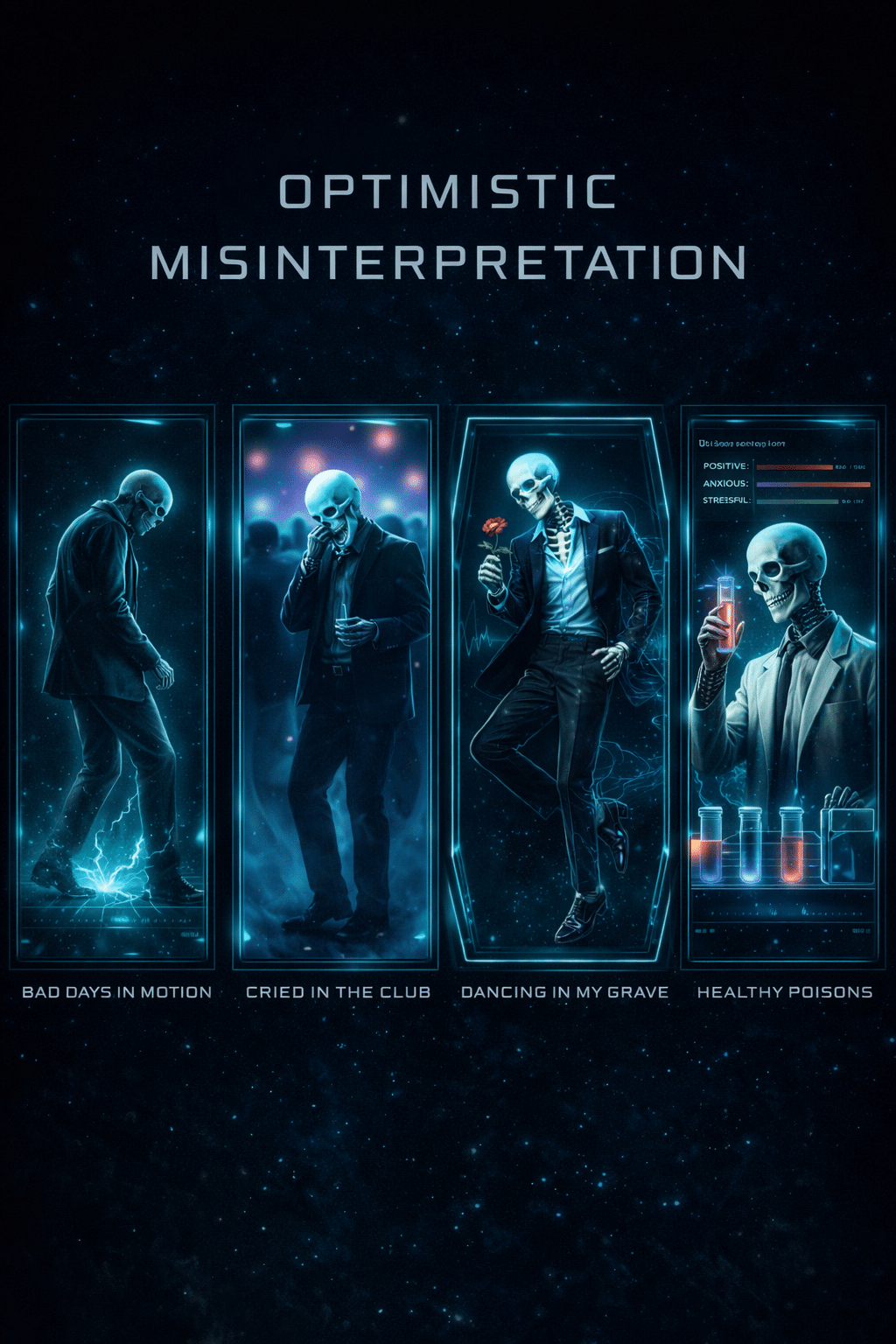
The record opens with “Dancing In My Grave,” which immediately sets the tone: movement over inevitability. Mortality isn’t avoided or dramatized – it’s accepted, then flipped into rhythm. The message is clear from the start: nothing lasts, so move anyway.
From there, “Healthy Poisons” pulls you into contradiction. It explores the quiet tension between what feels good and what’s actually good, without turning it into guilt or self-judgment. The energy stays smooth and controlled, letting indulgence exist alongside awareness.
“Cried in the Club” shifts the emotional layer without breaking the momentum. Vulnerability shows up in the middle of movement, not in isolation, proving that feeling deeply doesn’t require stepping away from the world. It’s emotional, but never heavy – the rhythm keeps carrying it forward.
With “Everything’s Temporary (So Am I),” the album introduces its first true release. Instead of building pressure, it lets go of it, reframing impermanence as something freeing rather than tragic. The track creates space, allowing everything that came before it to breathe.
That space gets grounded in “Bad Days in Motion,” where the focus turns to persistence without performance. There’s no dramatic turnaround here – just the quiet reality of continuing forward even when nothing feels right. It’s understated, but essential.
“Mess Looks Good On Me” brings the energy back up with a shift in perspective. Imperfection is no longer something to manage or overcome – it becomes something to own. The track carries a calm confidence, showing that identity doesn’t need to be polished to be valid.
Then comes “Heartbeat Out of Sync,” where things become less stable but more interesting. Instead of correcting imbalance, the track leans into it, turning irregularity into rhythm. What feels off becomes something you can move with, rather than something you need to fix.
The album closes with “I’ll Be Fine Later,” a quiet but powerful resolution. It doesn’t force a clean ending or pretend everything is solved – it simply acknowledges the present while trusting the future. After everything that’s been processed, reframed, and accepted, the final message is simple: you’re not there yet, but you will be.